In the 1700s, British ships carried millions of Africans across the ocean in chains, to be sold as slaves. Many died on the way. The trade made a great deal of money for people in Britain. And we have to be honest about something hard: Christians and churches were part of it. A Church of England missionary society owned plantations in Barbados, an island in the Caribbean, worked by enslaved people.
Other Christians decided it had to end. William Wilberforce became the best known of them.
A young man in Parliament
William Wilberforce was born in 1759 in Hull, a port city in the north of England. His family was wealthy. At only twenty-one he was elected to Parliament, the group of lawmakers that governs Britain. He was charming, funny and popular, and for a few years he mostly enjoyed parties and politics.
In 1785, he went through a deep change. He became a committed Christian. He thought about leaving politics to serve God some other way.
He went to talk with John Newton, a pastor who had once been the captain of a slave ship, and who later wrote the hymn "Amazing Grace." Newton told him to stay in Parliament. God could use him there.
The long fight
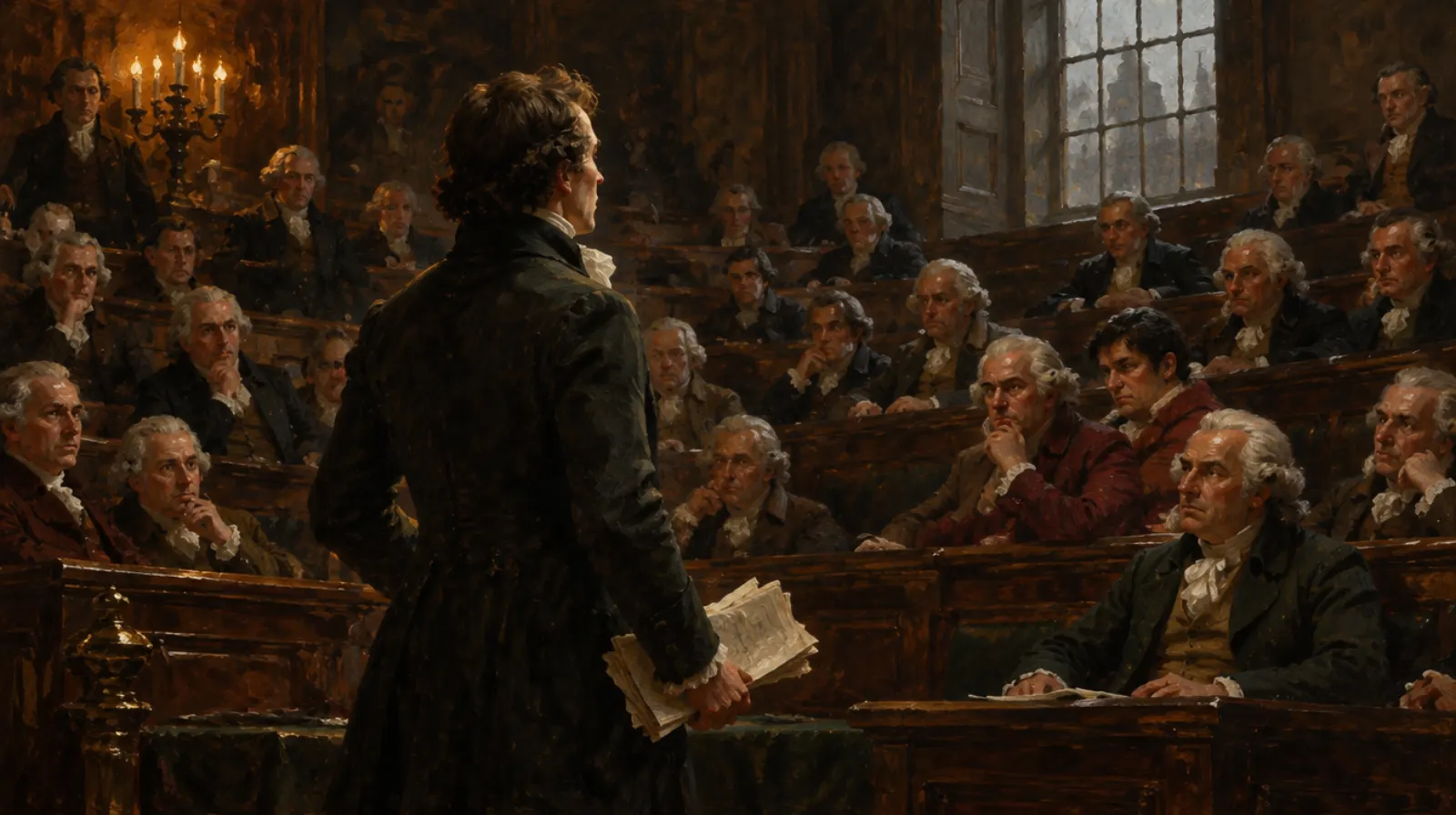
In 1787, Wilberforce joined a group of people working to end the slave trade, including a man named Thomas Clarkson, who gathered evidence of its cruelty. Wilberforce became their voice in Parliament.
His first law to end the trade was voted down in 1791. He tried again and again. Many powerful people made money from slavery and fought him hard. He received threats. His health was often poor, and some years he was discouraged and worn out. He kept going for about twenty years.
In 1807, Parliament finally passed a law ending the British slave trade. But people who were already enslaved were still not free.
So he kept going. Even after he left Parliament, he supported the campaign to free them. In July 1833, the law to abolish slavery across most of the British Empire passed its key vote. Three days later, Wilberforce died.
Why he did it
Wilberforce believed every person was made by God and loved by God, and that no one could own another. Jesus began his work by reading these words.
The Spirit of the Lord is upon me, because he hath anointed me to preach the gospel to the poor; he hath sent me to heal the brokenhearted, to preach deliverance to the captives, and recovering of sight to the blind, to set at liberty them that are bruised,
Luke 4:18 · King James VersionThe original Greek
Πνεῦμα κυρίου ἐπʼ ἐμέ, οὗ εἵνεκεν ἔχρισέν με εὐαγγελίσασθαι πτωχοῖς, ἀπέσταλκέν με κηρύξαι αἰχμαλώτοις ἄφεσιν καὶ τυφλοῖς ἀνάβλεψιν, ἀποστεῖλαι τεθραυσμένους ἐν ἀφέσει,
Found in Papyrus 75 (about AD 200), Codex Vaticanus (about AD 325), Codex Sinaiticus (about AD 350).
The words "to heal the brokenhearted" appear in later copies, not in the oldest ones.
What it means for us
Wilberforce was not perfect, and the end of slavery was the work of many people, including enslaved people who resisted and escaped. We should not make him the only hero. And we should remember that the church was on both sides of this fight.
What his story shows is what faithfulness can look like: one person who would not stop for almost fifty years. If you care about an injustice, you do not need to win quickly. You can keep going, one step at a time, and trust that God loves the people you are fighting for even more than you do.